

For almost two years, my office was a kitchen chair. Not a nice one, either. It was the same set of four wooden chairs that came with the table when my wife and I moved into our place in 2022, the kind with a flat seat and a back that hits you right at the shoulder blades and stops. I worked from it eight, sometimes ten hours a day, five days a week, because I told myself a chair was a chair and buying a real one felt like an unnecessary expense for someone who already had a place to sit.
I finally started looking for a fix this past spring, and I want to be upfront about how I ended up on the chair I bought, because I think it matters more than the review itself. I spent a weekend reading through threads and comparison posts, trying to figure out if a chair in the $250 to $350 range actually does anything or if that's just the range where you pay more and still don't solve the problem. That's what led me to Best Home Office Setup Hub, a site where people had actually tested chairs in that price bracket for months, not just unboxed them and written a first impression.
I want to be honest about how long I ignored the underlying problem before that, because I think a lot of people reading this are doing the same math I was doing for years. The pain started small. A tightness between my shoulder blades by 3pm. Then it moved lower, into my lower back, and by the fall of 2024 I was standing up from my desk like a man twice my age, one hand on the table, doing that slow unfold you see people do getting out of a car after a long drive. I'm 34. I run twice a week. This wasn't supposed to be my body's problem yet.
My wife was the one who finally said something, not about the chair, actually, but about how I'd stopped wanting to go for walks after dinner because my back was already done for the day. That landed differently than any ache had. I wasn't just uncomfortable at my desk anymore, the discomfort was bleeding into the rest of my life, and that's when the weekend of research turned into an actual order.
I wasn't just uncomfortable at my desk anymore. The discomfort was bleeding into the rest of my day, and that's when I finally admitted the problem wasn't my back. It was the chair.
The chair that actually changed my afternoons
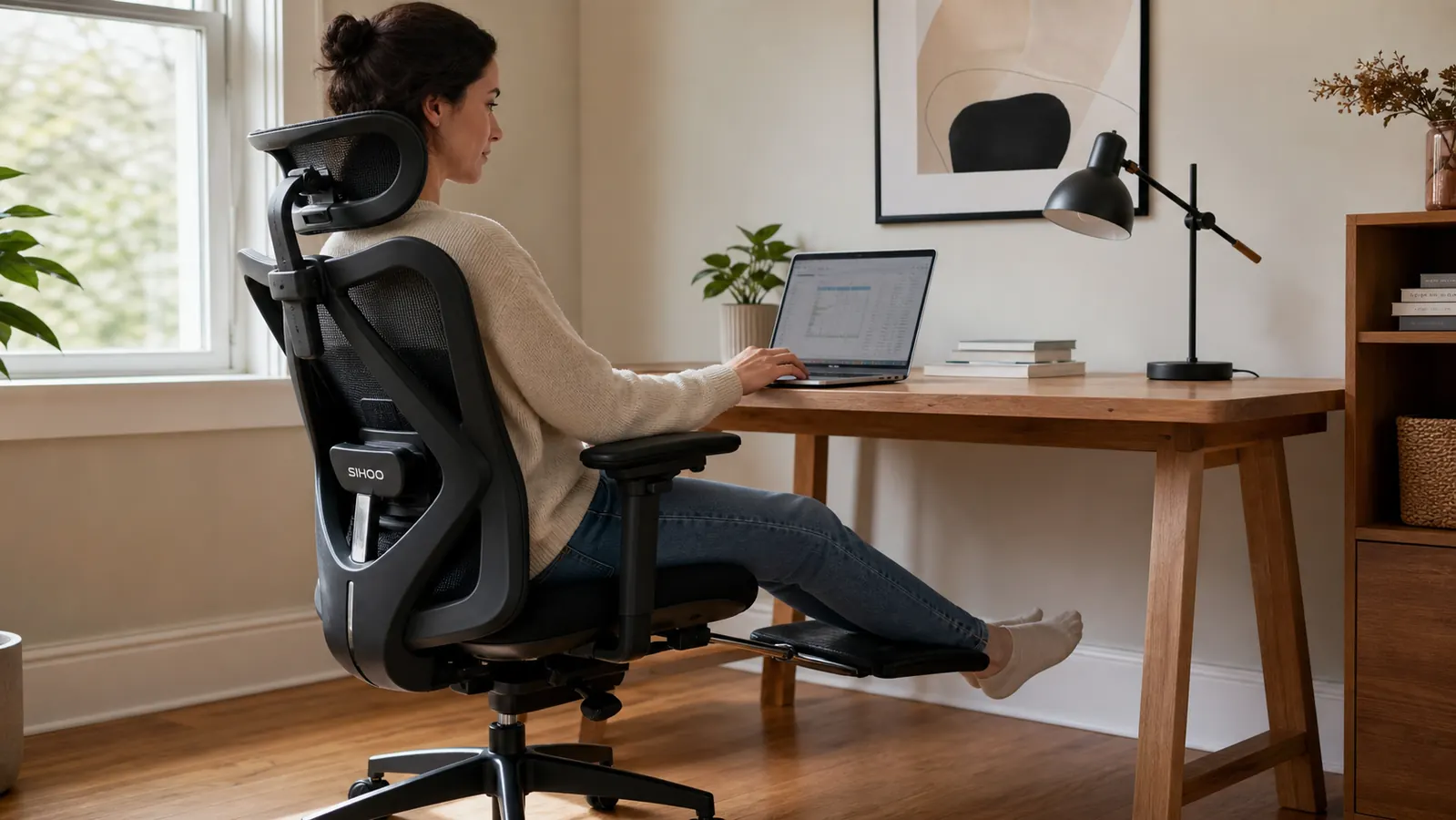
The SIHOO B100 PRO kept coming up in the reviews I trusted most, mesh back, adaptive lumbar support, a footrest that actually stays out instead of collapsing under your feet. It's rated 4.3 stars across nearly 17,000 buyers, which is a lot of people to have opinions about a chair.
Amazon See Today's Price on Amazon →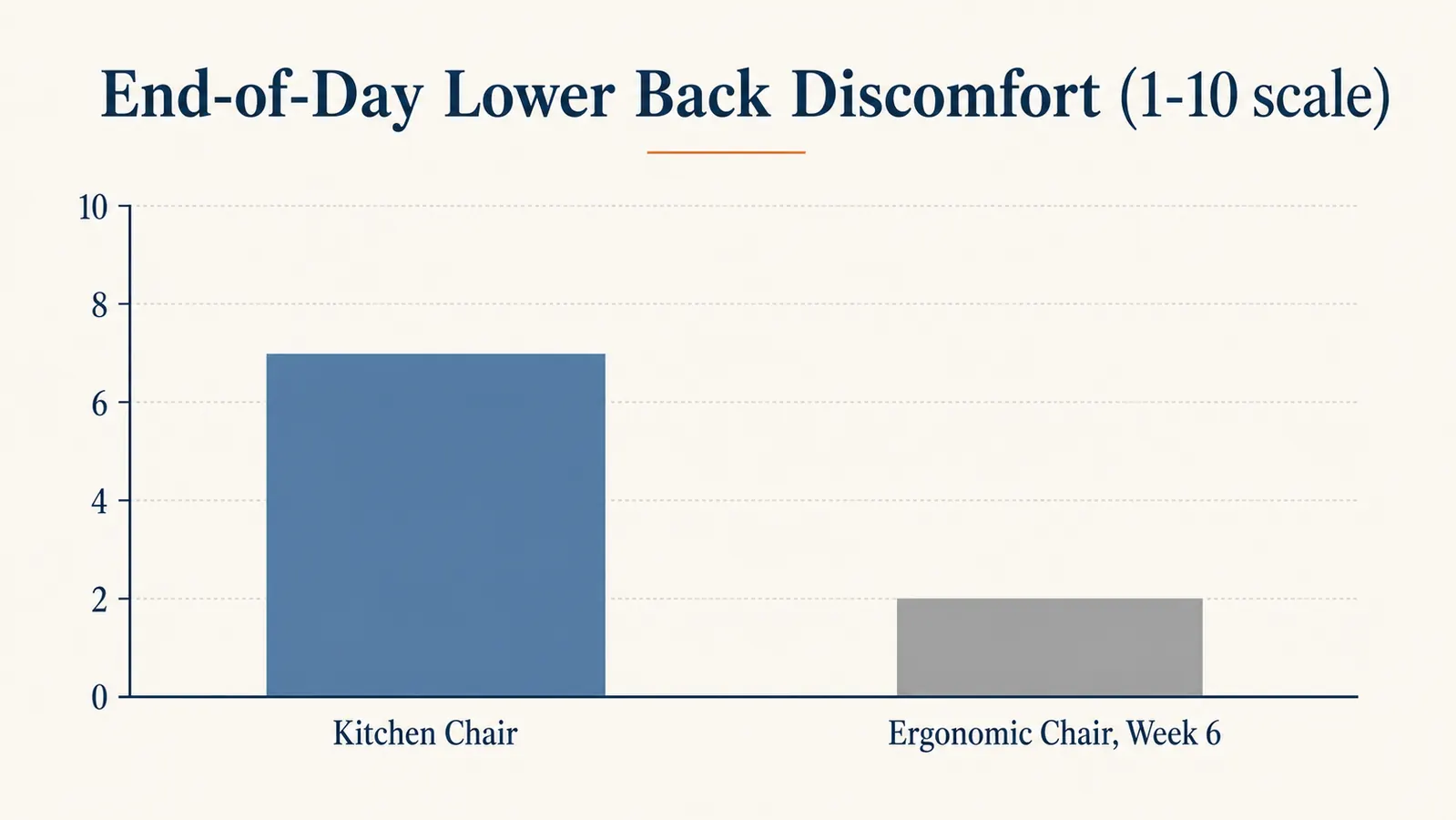
I ordered the SIHOO B100 PRO on a Tuesday and it showed up two days later in a box heavier than I expected, close to 60 pounds. Assembly took me about 40 minutes with a coffee break in the middle, which is longer than the ad copy promises but shorter than I feared based on some of the horror stories I'd read. The instructions are numbered clearly enough that I never had to backtrack, though I will say the caster wheels went on stiffer than I expected and I second-guessed myself for a minute before they clicked in.
The first thing I noticed sitting in it wasn't the lumbar support, it was the seat pan. It's wider and slightly firmer than I expected from the product photos, and it holds its shape instead of sinking the way a cheap cushion does after a month. I adjusted the lumbar depth that first afternoon, pushing it in until it actually met the curve of my lower back instead of floating an inch behind it, which is apparently a mistake almost everyone makes with adjustable lumbar chairs. Once I got that dialed in, the difference by end of day was immediate, not dramatic, just noticeably less of that tight, seized-up feeling I'd been living with.

The footrest surprised me more than anything else. I didn't think I needed one until I had it, and now during long calls I pull it out without thinking and it holds my weight without wobbling. It folds flush back under the seat when I don't want it, which matters because our home office doubles as a guest room closet corner and I don't need a footrest sticking out when someone's rolling a suitcase through.
Six weeks in, the walks after dinner are back. That's genuinely the metric that matters to me, not a number on a comfort scale, just whether I still want to move at the end of a workday instead of collapsing onto the couch. The chair isn't magic. I still stand up and stretch every hour or so because sitting for eight hours is sitting for eight hours no matter what you're sitting on. But the baseline discomfort that used to build by lunch and be unbearable by 4pm is mostly gone.
What I'd Tell You If We Were Sitting at My Kitchen Table
If you're reading this because your back has been quietly getting worse for months and you've been telling yourself it's not that bad, I'd tell you what I wish someone had told me sooner. It's not about willpower and it's not about your posture discipline. It's about the fact that a kitchen chair was never built to hold a body still for eight hours a day, and no amount of sitting up straight fixes a chair that doesn't support your lower back in the first place. You don't need the most expensive chair on the market. You need one built for the job you're actually asking it to do, and for me, that ended up being a $300 chair rather than a thousand-dollar one. Start there, adjust the lumbar until it actually touches your back, and give it two weeks before you judge it.
Still working from a chair that wasn't built for this
If your afternoons look like mine used to, the SIHOO B100 PRO is worth a look. Check today's price and see if it's in stock.
Amazon Check Today's Price on Amazon →